

Coffee
Why is Sumatra Mandheling Coffee Low Acid? (The Science Explained)
Nov
Do you love your morning cup of coffee, but hate the heartburn, acid reflux, or stomach jitters that follow? You are not alone. For millions of coffee lovers, acidity is a dealbreaker.
But here in Indonesia, we have a “secret weapon” for sensitive stomachs: Sumatra Mandheling Coffee.
As a coffee enthusiast living in Indonesia, I’ve seen firsthand how these unique beans are processed. It’s not magic—it’s a combination of unique biology, traditional processing, and roasting science.
In this guide, I will explain the science behind why Sumatra Mandheling is considered one of the best low-acid coffees in the world.
The Short Answer (For Busy Readers)
Why is Sumatra Mandheling Low Acid?
Sumatra Mandheling coffee is low in acid primarily due to two factors:
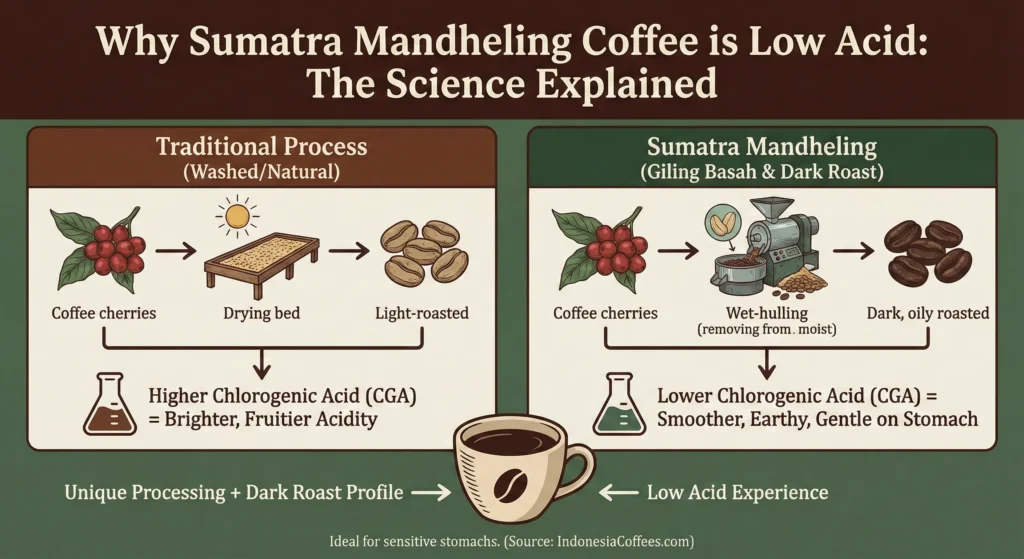
The “Giling Basah” (Wet Hulling) Process: A traditional Indonesian processing method that reduces acidity during fermentation.
Dark Roast Profile: Sumatra beans are typically dark roasted, which scientifically lowers the concentration of Chlorogenic Acid (the compound that triggers stomach irritation).
1. The Science: It’s About Chlorogenic Acid (CGA)
To understand why Sumatra coffee is gentle on your stomach, we first need to identify the culprit: Chlorogenic Acid (CGA).
While CGA is an antioxidant, it is also the primary compound responsible for the perceived acidity and bitterness in coffee. For people with GERD or acid reflux, high levels of CGA can stimulate the production of excess stomach acid, leading to discomfort.
Sumatra Mandheling typically has lower levels of CGA compared to high-altitude African or Central American coffees. But why? The answer lies in how the farmers treat the beans.
2. The Secret Weapon: “Giling Basah” (Wet Hulling)
This is where my local experience comes in. Unlike most coffees in the world that use the “Washed” or “Natural” process, Sumatran farmers use a unique method called Giling Basah (translated as Wet Hulling).
Here is how it works and why it lowers acidity:
The Process: In typical coffee processing, the protective parchment layer is removed after the bean is dried. In Sumatra, farmers remove this parchment while the beans are still wet (high moisture content of 30-50%).
The Result: Because the naked bean is exposed to the air and sun while still moist, it undergoes a specific type of fermentation and oxidation.
Impact on Acid: This rapid exposure mutes the bright, sparkling acidity (fruitiness) usually found in Arabica beans and replaces it with a heavy body and low-acid character.
It’s a risky process that requires skill, but it creates that legendary smooth finish.
3. Roast Profile: Darker Means Less Acid
The second factor is the roast. You will rarely find a “Light Roast” Sumatra Mandheling. It just doesn’t taste right.
Sumatran beans are dense and hold moisture differently, making them perfect for Medium-Dark to Dark Roasts (often called Full City or Vienna Roast).
The Scientific Fact: As coffee beans are roasted longer and hotter, the Chlorogenic Acids break down.
Light Roast: High Acidity, High CGA.
Dark Roast: Low Acidity, Low CGA.
Because Sumatra Mandheling is almost exclusively sold as a dark roast to highlight its spicy notes, you are naturally buying a low-acid product.
4. Flavor Profile: What Does It Taste Like?
Just because it’s low acid, doesn’t mean it’s flavorless. However, you need to manage your expectations. If you love the fruity, tea-like notes of Ethiopian coffee, Sumatra Mandheling might shock you.
Expect these tasting notes:
Mouthfeel: Thick, creamy, and syrupy.
Flavor: Earthy, cedar wood, brown spice, dark chocolate, and sometimes herbal.
Acidity: Muted, low, and smooth.
It is a bold, intense coffee that sits heavily on the tongue but goes down smoothly in the stomach.
5. How to Brew Mandheling for Sensitive Stomachs
If you want the absolute safest experience for your stomach, I recommend brewing your Sumatra Mandheling using these two methods:
Cold Brew: Brewing with cold water extracts 60-70% less acid than hot water. Sumatra beans make an excellent cold brew because their chocolatey notes shine through without becoming sour.
French Press: The metal mesh allows the natural oils of the Sumatra bean to end up in your cup. These oils can actually help coat the stomach lining and neutralize acidity.
Frequently Asked Questions (FAQ)
Here are common questions regarding Sumatra Mandheling and acidity.
Is Sumatra Mandheling coffee Arabica or Robusta?
Authentic Sumatra Mandheling is 100% Arabica. Although it has the heavy body usually associated with Robusta, it is a high-quality Arabica bean grown in the volcanic highlands of North Sumatra.
Does Sumatra coffee have more caffeine?
Generally, no. As an Arabica bean, it has less caffeine than Robusta. Furthermore, darker roasts (common for Sumatra) actually have slightly less caffeine by volume than light roasts. This is good news for those whose stomach issues are triggered by caffeine jitters.
Is Sumatra Mandheling suitable for GERD / Acid Reflux?
Many sufferers of GERD report that Sumatra Mandheling (especially Dark Roast) is much more tolerable than other coffees. However, every body is different. We recommend trying a small cup first or using the Cold Brew method.
